
CELEBRITY
BREAKING: “Washed-up? Honey, I grind cheap insults into dust before my caffeine even kicks in.” The studio froze. Stephen Colbert didn’t raise his voice—he sharpened it. Every word landed like steel on bone. Just minutes earlier, Iv.a.n.k.a T.r.u.m.p had tried to swat him away as a “washed-up, overhyped late-night relic,” assuming the internet would shrug, laugh, and scroll on.

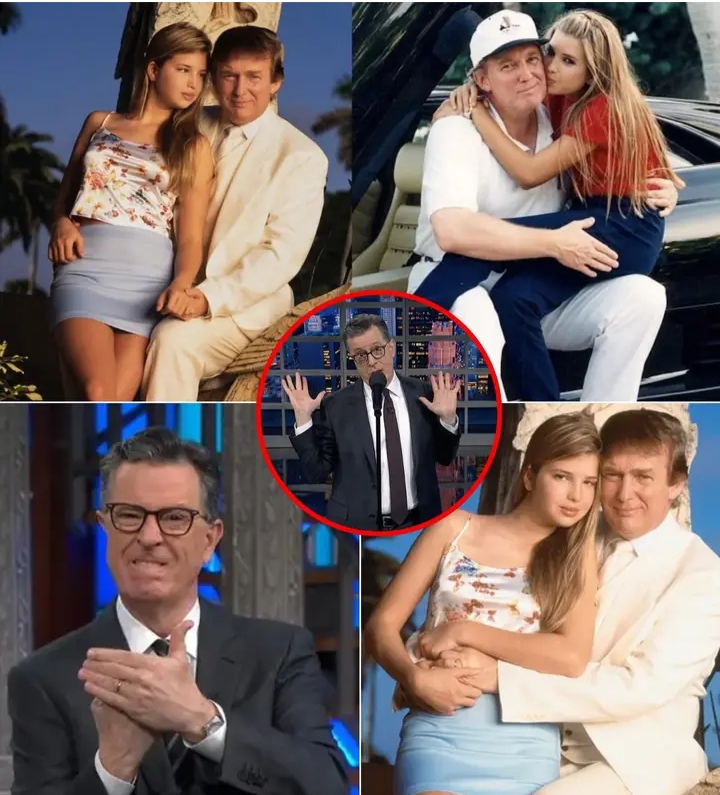
BREAKING: “Washed-up? Honey, I grind cheap insults into dust before my caffeine even kicks in.”
The studio froze. Stephen Colbert didn’t raise his voice—he sharpened it. Every word landed like steel on bone. Just minutes earlier, Iv.a.n.k.a T.r.u.m.p had tried to swat him away as a “washed-up, overhyped late-night relic,” assuming the internet would shrug, laugh, and scroll on.
Big mistake.
WATCH MORE 👉
Colbert leaned in, eyes hard, jaw set, staring straight through the camera like he was done playing nice.
“Let’s be clear,” he snapped. “When spoiled power talks down, it’s panic. When comedy hits up, it’s the truth you’re too weak to face.”
The crowd didn’t clap—they exploded. Phones were already out. The clip went nuclear in real time. Comment sections turned feral. Timelines drowned. Then came the six words—short, brutal, merciless—slicing mockery into humiliation.
Ivanka?
Dead air.
No tweet.
No comeback.
No courage.
Backstage, producers said it didn’t feel like comedy anymore. It felt like a reckoning. Colbert didn’t rant like a desperate man. He carved like someone who knew exactly where to cut. He skinned the insult alive and shoved it under a spotlight.
“This was never about me,” he said coldly. “It’s about fragile elites who melt down the second they’re laughed at.”
By morning, the verdict was in. Nobody remembered the insult. Everyone remembered the silence. This wasn’t a clapback—it was a public execution of arrogance, carried out with a grin and a blade.
In a moment that felt less like late-night banter and more like live-wire theater, Stephen Colbert reminded viewers why satire still has teeth. After being dismissed as “washed-up” by Ivanka Trump, Colbert didn’t bluster or beg for laughs. He paused, leaned into the camera, and delivered a response so controlled it felt surgical. The studio went quiet—not from discomfort, but anticipation.
Colbert framed the exchange as something larger than personal insult. When powerful figures lash out, he suggested, it often signals insecurity, not confidence. Comedy, he argued, doesn’t punch down for sport—it exposes truths that polished talking points can’t hide. The audience erupted, not with polite applause but with the kind of roar that signals a moment has landed.
Within minutes, clips flooded social media. The insult that sparked it all vanished into the noise, replaced by replay after replay of Colbert’s measured takedown. Trump offered no response. No post, no rebuttal—just silence, which only amplified the moment.
Backstage, producers reportedly sensed the shift. This wasn’t a punchline chasing a laugh; it was satire doing what it does best—holding power up to the light and letting the reaction speak for itself. By morning, the takeaway was clear: in a media landscape obsessed with clapbacks, restraint can cut deeper than rage.

BETRAYAL BOMBSHELL: MURDOCH TURNS ON TRUMP, CALLS OUT WAR CRIME SCANDAL IN SHOCKING HIT PIECE — Fox Empire Ally Exposes Hegseth’s Deadly Secrets, International Fury Ignites as Cover-Ups Unravel!

BREAKING: Trump IS “TRAITOR” Military General GOES NUTS on Trump A retired four-star general has just issued one of the most serious warnings yet about Donald Trump—and it’s not coming from politicians, but from the military itself. These are leaders who spent decades defending the Constitution, and they’re sounding the alarm that Trump is breaking the most sacred rule of American democracy:

BREAKING NEWS: Trump FACES JAIL as Congress DROPS 7 Impeachment Articles! No one is above the law. In the past 24 hours, history has unfolded before our eyes. The U.S. Congress has introduced seven articles of impeachment against President Donald Trump, while multiple criminal investigations accelerate toward the possibility of real consequences…

BREAKING NEWS: Stephen Colbert says an anonymous source claims 12 powerful figures paid $60 million to bury a secret — and he plans to name them live tonight.

BREAKING:“FIX THIS NOW!”: TRUMP ERUPTS AS THE FIVE LARGEST TOURISM MARKETS TURN THEIR BACKS ON THE U.S., AMERICA’S TOURISM INDUSTRY ON THE BRINK OF TOTAL COLLAPSE

JUST IN: NO NEED TO WAIT FOR CONGRESS: FEDERAL JUDGES HOLD THE POWER TO SEND TRUMP STRAIGHT TO JAIL AS SEVEN ARTICLES OF IMPEACHMENT DROP ON THE SAME DAY

MAJOR BREAKING: Supreme Court Rejects Trump’s Tariff Authority — Here’s What It Means:

BREAKING: Senate Votes 68–32 to CONVICT — President Trump REMOVED, REFUSES to Accept Verdict! Washington, D.C. — The chamber fell into a silence so heavy it seemed to press down on the marble itself. When the final tally appeared on the board — 68 to convict, 32 to acquit — there was no roar, no gasp, no release. Just a stillness that signaled history had pivoted, whether anyone in the room was ready for it or not. Moments later, the presiding officer announced the result. President Donald J. Trump was removed from office.

🚨 Trump’s Florida Event Sparks Online Frenzy A short clip from a recent appearance in Florida has triggered intense debate online. Some posts suggest a medical scare, while others say the footage is being taken out of context. Before jumping to conclusions, here’s what’s been officially reported

🚨 UNREDACTED EPSTEIN FILES RELEASED — LAWMAKERS BEGIN REVIEW Millions of previously sealed documents connected to Jeffrey Epstein have reportedly been made available to a bipartisan group of lawmakers, marking a significant procedural development in a case that has drawn sustained public attention.

⚡ Viral posts say power has already shifted. Acting president. Immediate removal. Constitutional earthquake. But pause. There’s no official transmission. No VP statement. No Tier-A confirmation… 🔍 If Section 4 were real, Washington wouldn’t whisper — it would shake within the hour.
