
CELEBRITY
BREAKING NEWS: The Republican ship is SINKING. 4 GOP Senators and 23 GOP Reps announced they will NOT seek re-election in 2026. Full Details 👇👇

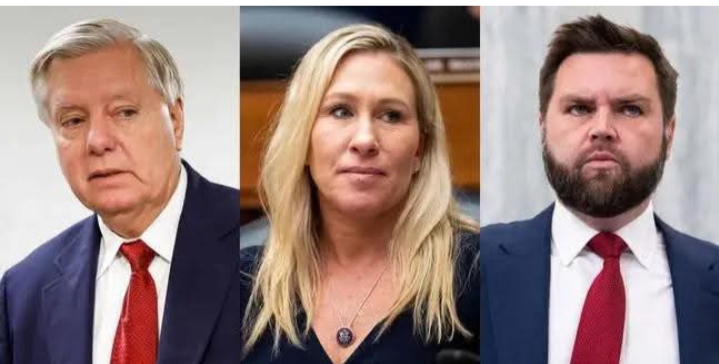
BREAKING NEWS: The Republican ship is SINKING. 4 GOP Senators and 23 GOP Reps announced they will NOT seek re-election in 2026.
Full Details 👇👇
## Republican Exodus: A Sea Change in Congress
Washington — The Republican Party appears to be facing a serious reckoning ahead of the 2026 midterms, as a wave of retirements threatens to reshape its hold on both chambers of Congress. As of now, dozens of incumbent Republicans have announced they will **not** seek re-election — in many cases opting to step away from public office entirely, or to pursue other role
### Record-high departures
According to recent tracking, a historic number of lawmakers are not running in 2026. Across Congress — from the Senate to the House — roughly **10 senators and 42 House members** have publicly declared they will end their current terms.
Among them are prominent Republicans. On the Senate side, for instance, Thom Tillis and Tommy Tuberville are among those set to leave.
In the House, recent departures include Troy Nehls, who announced he will not seek reelection — citing family considerations.
### What’s behind the exodus
Analysts suggest several factors driving the surge in retirements and exits:
* **Fractures within the party.** Some Republicans appear disillusioned by internal strife, shifting power dynamics, and ideological divisions, particularly around alignment with the leadership of former President Donald Trump. ([Washington Examiner][3])
* **Midterm pressure and electoral uncertainty.** With 2026 shaping up as a difficult cycle for the party in power, especially if the electorate seeks change mid-presidency, many incumbents may be opting out rather than face competitive primaries or general elections
* **Ambitions beyond the House or Senate.** A number of sitting lawmakers are not simply retiring — but seeking other offices: governorships, Senate seats, or statewide positions
### Why it matters: What the GOP stands to lose
This scale of turnover could be deeply consequential for Republican influence in Congress:
* **Loss of institutional memory and seniority.** Departing members often hold key committee seats and leadership roles. Their exit erodes continuity and may leave the GOP with a less experienced bench.
* **Greater vulnerability to Democratic advances.** Open seats tend to attract competitive races, especially in districts that have grown more politically diverse. With many Republicans stepping down, the path becomes more favorable for opposition or swing-party challengers.
* **Internal reorientation — or further fragmentation.** As veterans depart and new faces rise, the ideological center of the party may shift, sparking either consolidation around a new vision or internal clashes that deepen fractures.
### Not “4 Senators + 23 Reps,” — the real scale
Contrary to the dramatic headline that “4 GOP Senators and 23 GOP Reps” alone are stepping away, the reality is much broader. Current data show **about 10 senators and more than 40 House members** across parties announcing departures. For Republicans alone, a large share of those departures — though far more than 4 + 23 — are driving what many observers call a “GOP exodus.”
The flurry of announcements underscores a moment of crisis — or transformation — for Republicans ahead of 2026. Whether this turn of events signals a long-term decline or simply a generational shift remains to be seen. Either way, the coming midterms are shaping up to be among the most consequential for congressional control in a decade.

TRUMP’S DOOMSDAY: 13 Articles of Impeachment Filed Against Him – Highest in American History! He Will Be Impeached on This Explosive Date

🚨 TRUMP UNDER SIEGE: 24 Members of Congress Publicly Push for Impeachment – Historic Defection Could End His Presidency Tonight!

JUST IN: 30 MILLION VIEWS IN 1 HOUR: OBAMA BREAKS THE INTERNET BY DECLARING TRUMP THE BIGGEST THREAT TO AMERICA TODAY

Biggest Meltdown EVER: Enjoy our full breakdown of Trump’s attack on MAGA allies that he posted just moments after Melania’s disastrous speech that may earn her a House Oversight subpoena to testify against him.

BREAKING: The White House has rejected claims made by Jesse Ventura suggesting the assas*sination attempt on Donald Trump was staged. Officials emph*asized that the incident was real and should be tre*ated with serio*usn*ess.

BREAKING: President Donald Trump has renewed his campaign to be considered for the Nobel Peace Prize, claiming he deserves the honor for helping end several major conflicts.

BREAKING: Full text of Survivors’ BLISTERING response to Melania: Survivors have already shown extraordinary courage by coming forward, filing reports, and giving testimony. Asking more of them now is a deflection of responsibility, not justice.

JUST IN: “Are you deaf, blind, or simply too afraid to admit that this administration poisoned the system from top to bottom?” Pope Leo XIV said firmly, his voice echoing through the hall as his hand struck the table sharply.

JUST IN: A federal judge has rejected the Pentagon’s revised press policy, ruling that it violated his earlier order and amounted to an attempt by Pete Hegseth and the Trump administration to control what the American people see and hear.

🇮🇷📜 IRANIAN SUPREME LEADER’S MESSAGE: “Iran Has WON” On the 40th day after the martyrdom of Ayatollah Ali Khamenei, new Supreme Leader Mojtaba Khamenei declares:

Zelensky Welcomes Ceasefire Signals Ukraine Ready to Pause War if Russia Stops Attacks
