
CELEBRITY
JUST IN: T.r.u.m.p OPENLY THREATENS Canada Over Ports — but Carney FLIPS THE SCRIPT, Leaving Him HUMILIATED on the World Stage! In a jaw-dropping diplomatic showdown that left the entire room in stunned silence, Donald T.r.u.m.p abruptly pressured Canada over access to strategic ports — only to be swiftly shut down and embarrassed by Prime Minister Mark Carney in front of global leaders.

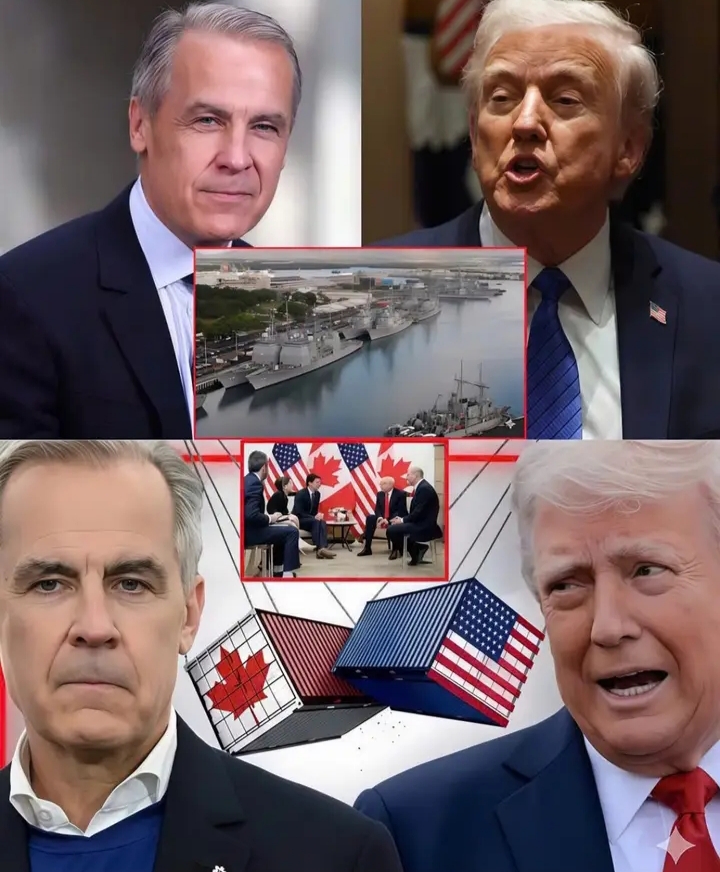
JUST IN: T.r.u.m.p OPENLY THREATENS Canada Over Ports — but Carney FLIPS THE SCRIPT, Leaving Him HUMILIATED on the World Stage!
In a jaw-dropping diplomatic showdown that left the entire room in stunned silence, Donald T.r.u.m.p abruptly pressured Canada over access to strategic ports — only to be swiftly shut down and embarrassed by Prime Minister Mark Carney in front of global leaders.
T.r.u.m.p demanded expanded U.S. control over Canada’s critical shipping routes, claiming Washington had been “taken advantage of for decades.” But Carney didn’t hesitate. With a calm yet razor-sharp tone, he made it crystal clear that Canadian ports, Canadian waters, and Canadian sovereignty are never up for negotiation.
Witnesses say T.r.u.m.p fell completely silent as Carney delivered his cutting rebuttal, flipping the balance of power in just a few sentences. Several European leaders reportedly nodded in approval, while Asian delegates whispered that they had just witnessed a rare masterclass in high-stakes diplomacy.
The confrontation left Washington rattled and off balance — but the most shocking moment was still to come…
What Carney said next made the entire room erupt — click the link below to see the line that left T.r.u.m.p completely speechless!
In a tense but carefully choreographed diplomatic exchange, former U.S. President Donald Trump reportedly used a global forum to air long-standing grievances about North American trade and infrastructure, singling out Canada’s strategic ports and shipping routes. Framing his remarks as a matter of “fairness,” Trump argued that the United States has borne disproportionate costs for continental commerce and security.
Canada’s response, led in this scenario by Prime Minister Mark Carney, was swift and deliberate. Without raising his voice or escalating the rhetoric, Carney underscored a core principle of Canadian foreign policy: sovereignty over its ports, waterways, and infrastructure is non-negotiable. Cooperation with allies, he noted, must rest on mutual respect—not pressure or unilateral demands.
Observers described the room as attentive rather than explosive. European and Asian delegates appeared engaged by the contrast in styles—Trump’s confrontational framing met by Carney’s measured, rules-based reply. Rather than trading barbs, Carney emphasized existing treaties, international maritime law, and the economic interdependence that already benefits both countries.
The exchange, while dramatic in tone, highlighted a familiar truth in modern diplomacy. Power is not only projected through demands, but through restraint, clarity, and adherence to shared norms. In that moment, the spotlight shifted from confrontation to credibility—reminding the audience that effective leadership on the world stage often speaks softly, but carries undeniable weight.

Supreme Court Issues Emergency Injunction — Orders Donald Trump to Immediately Remove Controversial Strait of Hormuz Blockade

BREAKING: Connor McDavid Takes Explosive Stand Against Child Exploitation — “Society is Failing Our Kids!”

International Criminal Court Summons Donald Trump, Pete Hegseth, and Benjamin Netanyahu to Appear for May 1, 2026 Hearing Over Alleged War Crimes

🚨 “Photos Tell Stories—But Context Tells the Truth”: Viral Campaign Sparks Fierce Debate on Media Manipulation and Public Figures

Taylor Swift Issues Explosive Statement Amid Intense Political Pressure

“This is a DEEP STATE COUP! I Have Every Right to Fire Anyone I Want!” — Courts Deliver Massive Reality Check

No, the World Must Not Look Away: A Single Mother’s Horrific Ordeal in Iran’s Prisons

🏛️⚡ TRUMP REMOVAL RUSHES IN — GOP REBELS JOIN IMPEACHMENT! The Walls Are Closing In!

FIRST LADY TRAPPED: Michael Wolff Presents IRREFUTABLE Evidence — Melania Trump’s Epstein Deposition Now UNAVOIDABLE!

Was Melania Trump Just a “Pawn” in the Epstein Scandal? Explosive New Statement Ignites Fresh Controversy

Wayne Gretzky Goes Nuclear in Explosive Defense of Connor McDavid — “This is a CRIME AGAINST HOCKEY! A Disgusting Betrayal of Everything the Sport Stands For. How Can People Be So Heartlessly Cruel?
